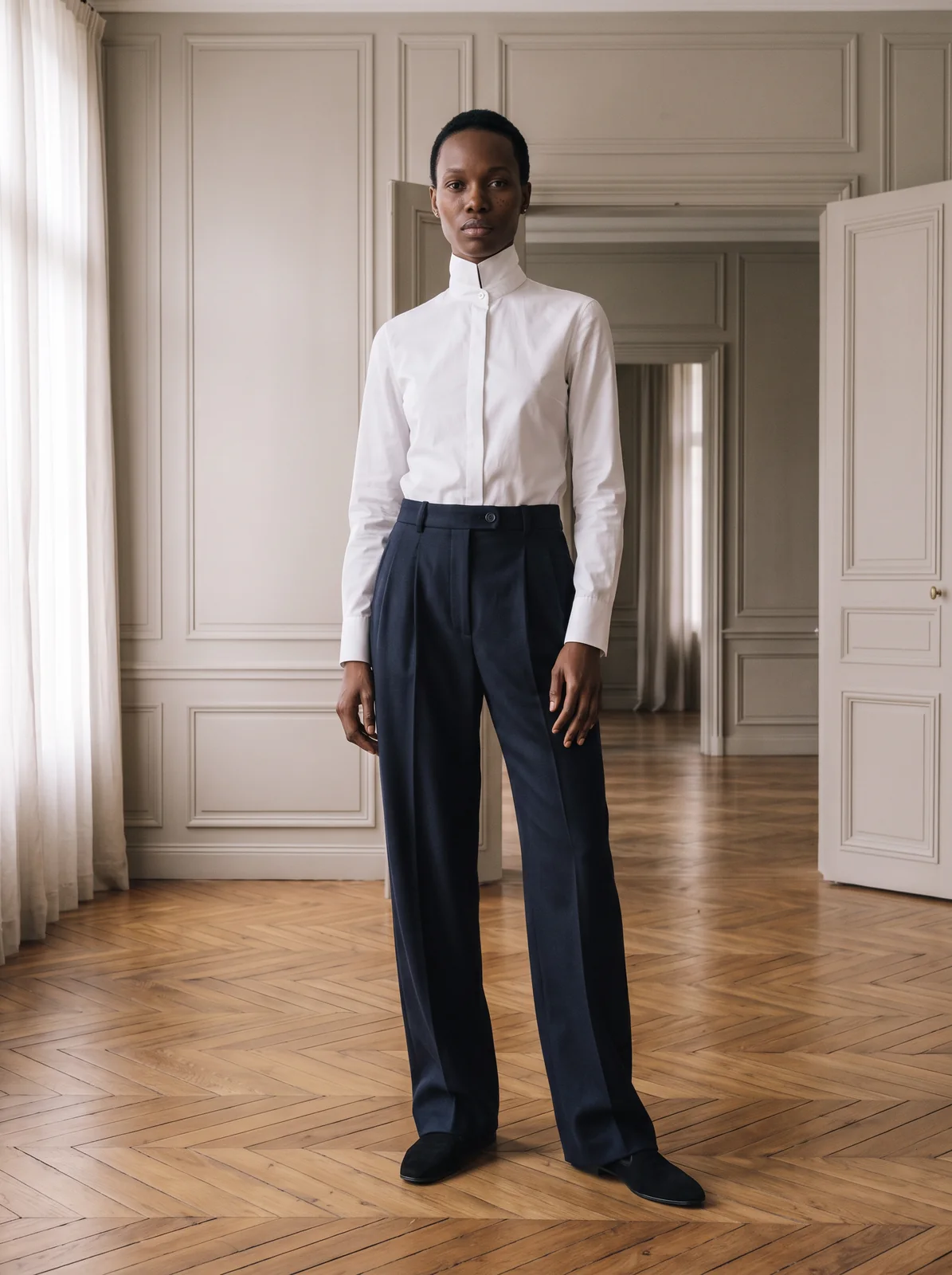
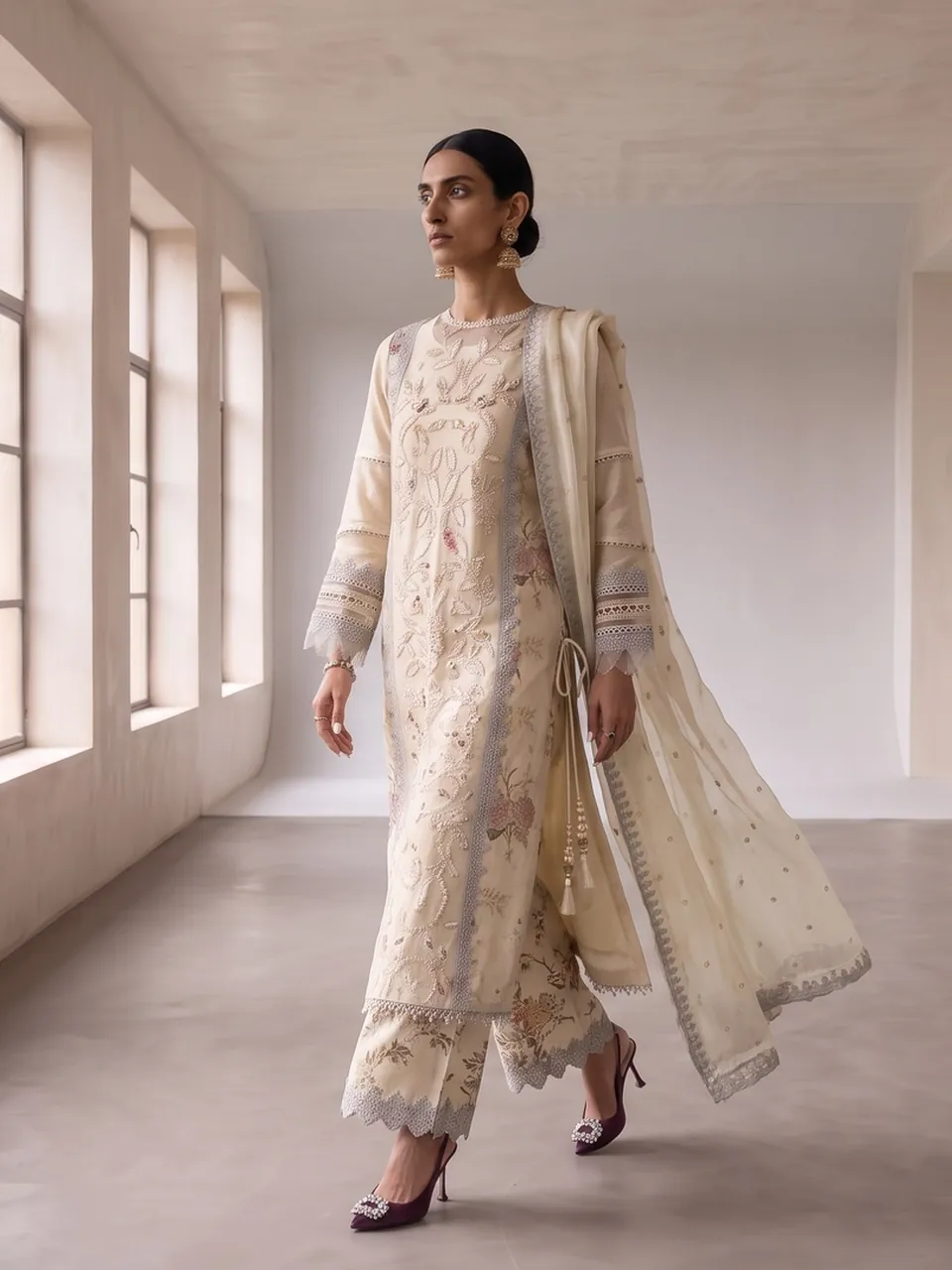
A garment doesn't go in as a photo and come out as a picture. It passes nine stages, with a check at each, and the hard part is keeping the same face, the same garment and the same space across the whole range.
The nine stages
From your garment to a finished set, one stage at a time.
01
The brief
We agree what each piece is for, and choose its model, space and direction.
We agree what the pieces are for: catalogue, editorial, campaign, social, or a mix. For each piece we choose the house model, the space and the direction against that space's real colours and light, with a one-line reason it works there.
Every shot is written down before anything is made.
People
People choose; you agree.
Our tools
Our tools turn the plan into a shot list.
The check
Your yes. If the plan is wrong, we change the plan, not the frames.
The LidoStill life
02
Understanding the garment
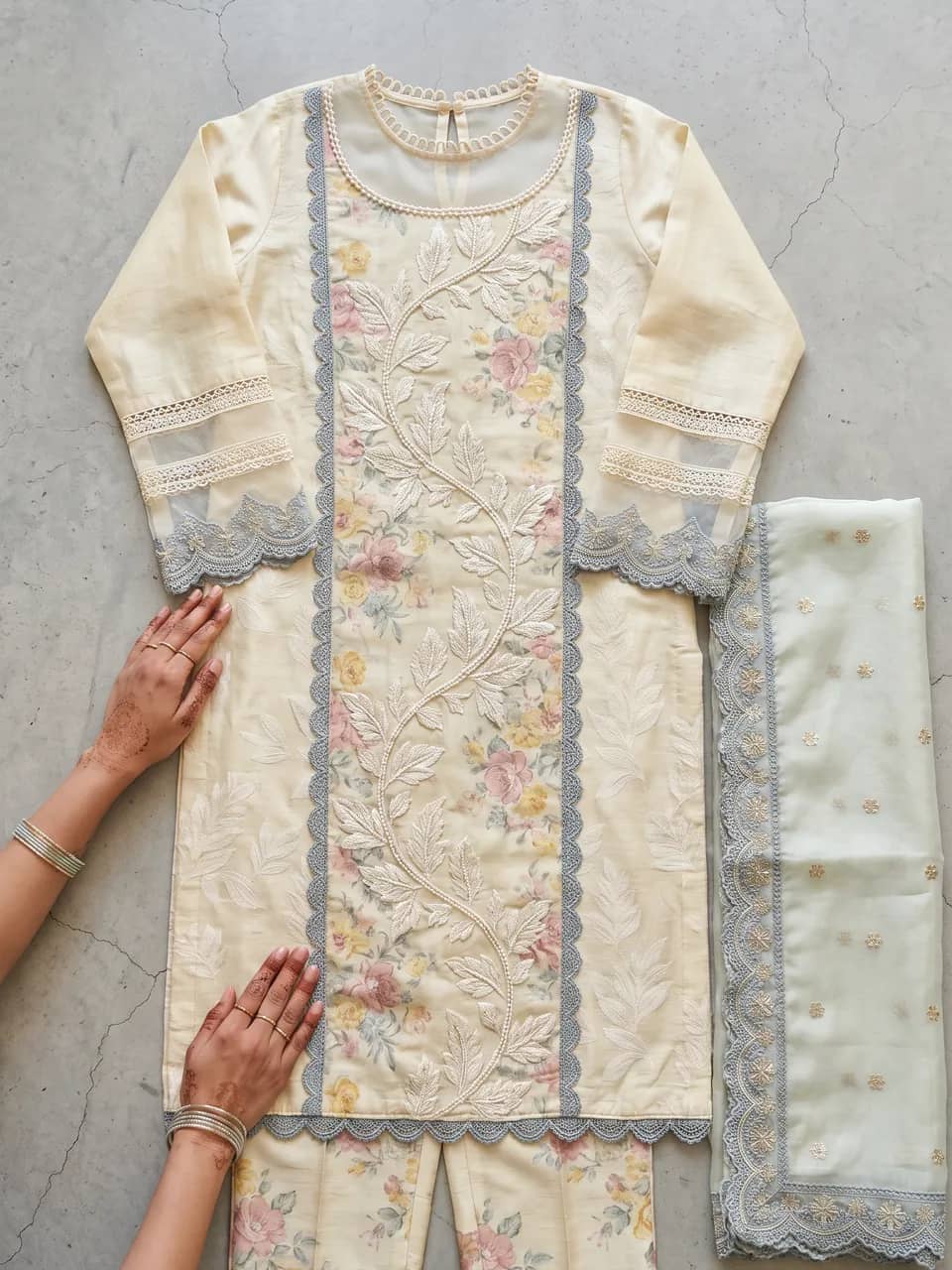
Each piece is studied from your photos: cut, colour, print, border, embroidery, trims.
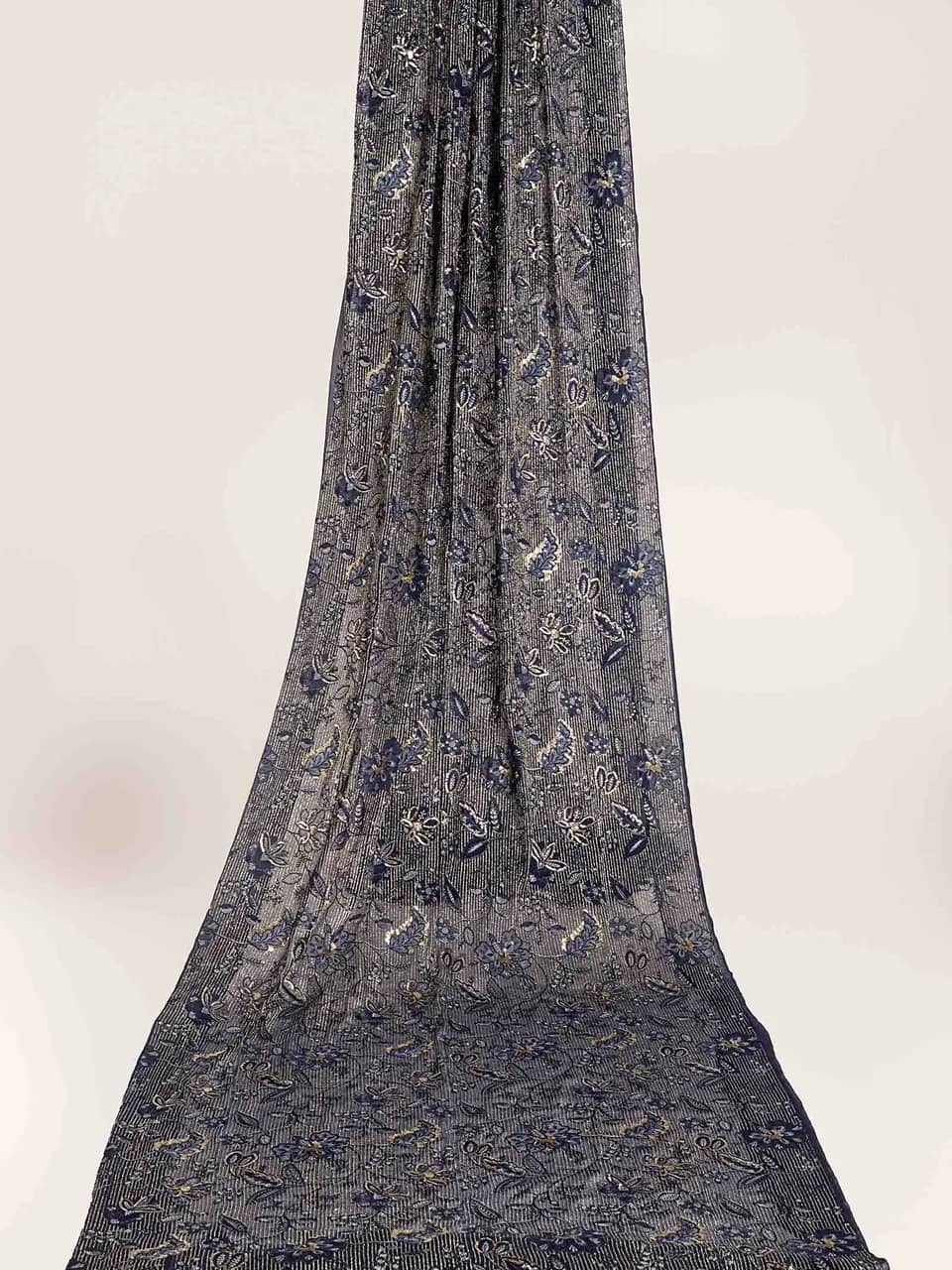
A flat lay, a hanger shot, an on-model photo or unstitched fabric all work; a phone photo is enough. We study it piece by piece: the cut, each piece's own colour, the print scale, where the border runs, the embroidery zones, what each trim is made of.
Any other model's face in your photos is cropped out first, so it can't carry over. Where a close-up is missing, we ask for it. Where a detail needs its own approach, we agree it with you before we start.
People
People write the description and decide which close-ups are missing.
Our tools
Our tools crop faces out and write down an embroidered piece's structure once, for every frame.
The check
Do we have the back, a flat close-up of every embroidered zone, and the real logo artwork? If not, we ask.
As sent
03
Model and space
A house model with a fixed face and height, in a space built as a set of fixed views.
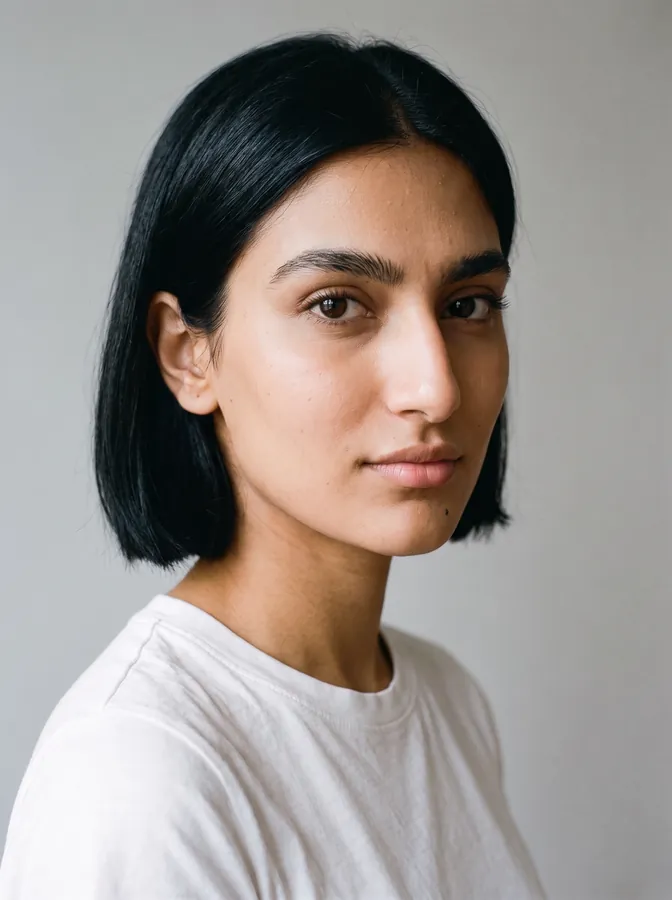
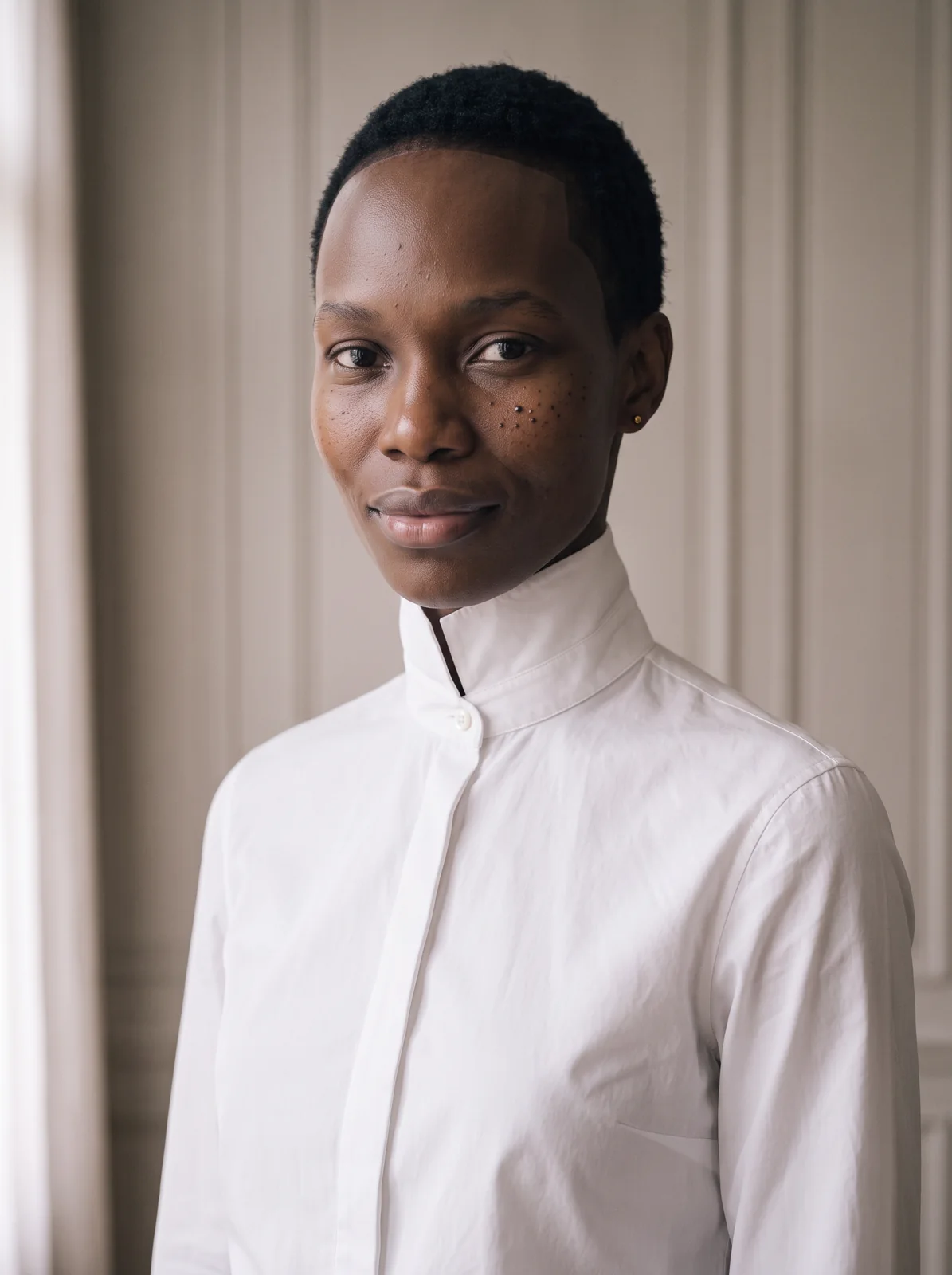
Each house model is fixed: a straight-on and a three-quarter face, identity marks such as a mole on one cheek, a measured skin tone that is never lightened, a recorded height and figure that is never slimmed.
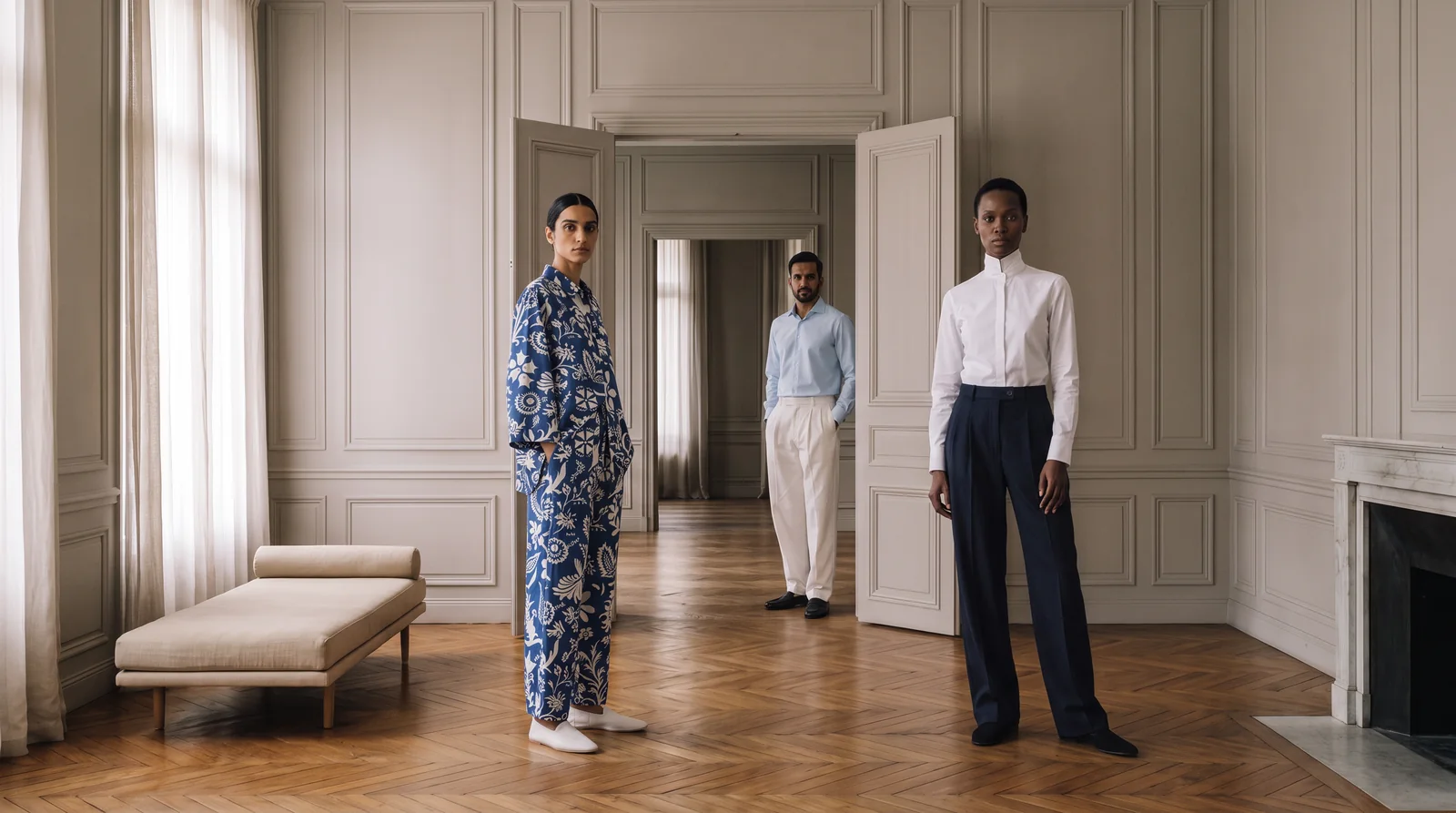
Each space starts as one photograph and becomes a set of empty views: wide, medium, seated, reverse, a surface from above, each with its own camera height and light. The model is photographed inside the view, not pasted onto it, and the views never change between frames.
People
People approve faces and spaces, and check every view at full size.
Our tools
Our tools pick the view for each pose and keep the space's light on the model.
The check
A test set per face; a test frame per new space. If it fails, the view is retouched or the space is dropped.
The EnfiladeZoya, Amara and WaleedKey visual
A fixed face
04
Direction
One direction per campaign, so every frame agrees: styling, expression, light, grade.
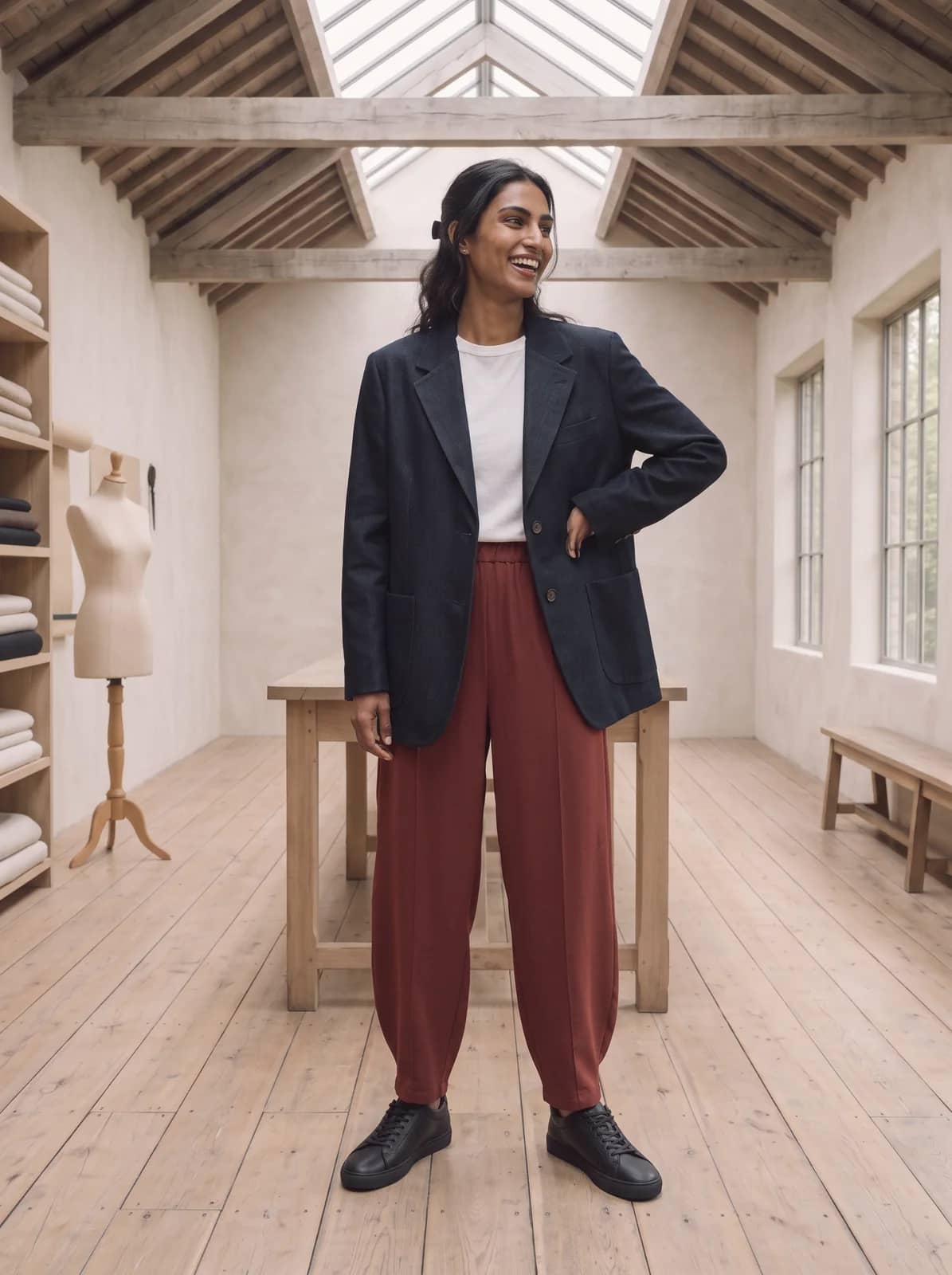
Each campaign gets one direction: the styling, the expression, the light, the colour grade, and a standard for realism (real skin texture, natural asymmetry, real fabric weight). Shots come from a library of catalogue and campaign framings, each with its pose and camera written out.
Because every frame follows the same direction, the frames agree with each other. The space's own light always wins.
People
People write directions, choose shots and state the styling: plain shoes, no jewellery unless asked.
Our tools
Our tools assemble each frame's instructions and send the hardest poses to our most careful setting.
The check
Directions are tried on test frames first. Every frame records which version made it.
The AtelierRaniaLook 04
05
The first frame
The front is made first, alone, and checked at full size before anything else exists.
Each garment's standard front is made first, alone, as a large master when details will be cut from it. It is checked at full size against every photo you sent before any other view exists.
Every later view copies this frame, flaws included. So this is the check that protects your garment.
People
A person checks at full size and names the cause of any fault.
Our tools
Our tools count hands and feet and measure each piece's colour against your photo.
The check
Neckline, panels, borders, trims, colour, hands, feet. If it fails, a retake with the cause fixed.
The EnfiladeAmaraLook 01
06
The full range
Every other view follows the approved front, so the garment stays itself.
Every other view is made against the approved front: back, three-quarter, seated, walk, portrait, hands, still life, group frames, film key frames. The front carries the garment's design; only the pose, the framing and the view change.
Backs start from your back photo and drop front-only details. A dupatta stays on the same shoulder. Group frames put every face front-on, in a fixed order. Colourways and product-only frames come from the same references.
People
People choose the views and check each one.
Our tools
Our tools attach the approved front, pick the space's view, and remake any view that comes back as a near-copy.
The check
Each view against the approved front and your photos. If it fails, a retake, with the cause fixed so it can't recur.
The EnfiladeAmaraLook 01
The EnfiladeAmaraPortrait
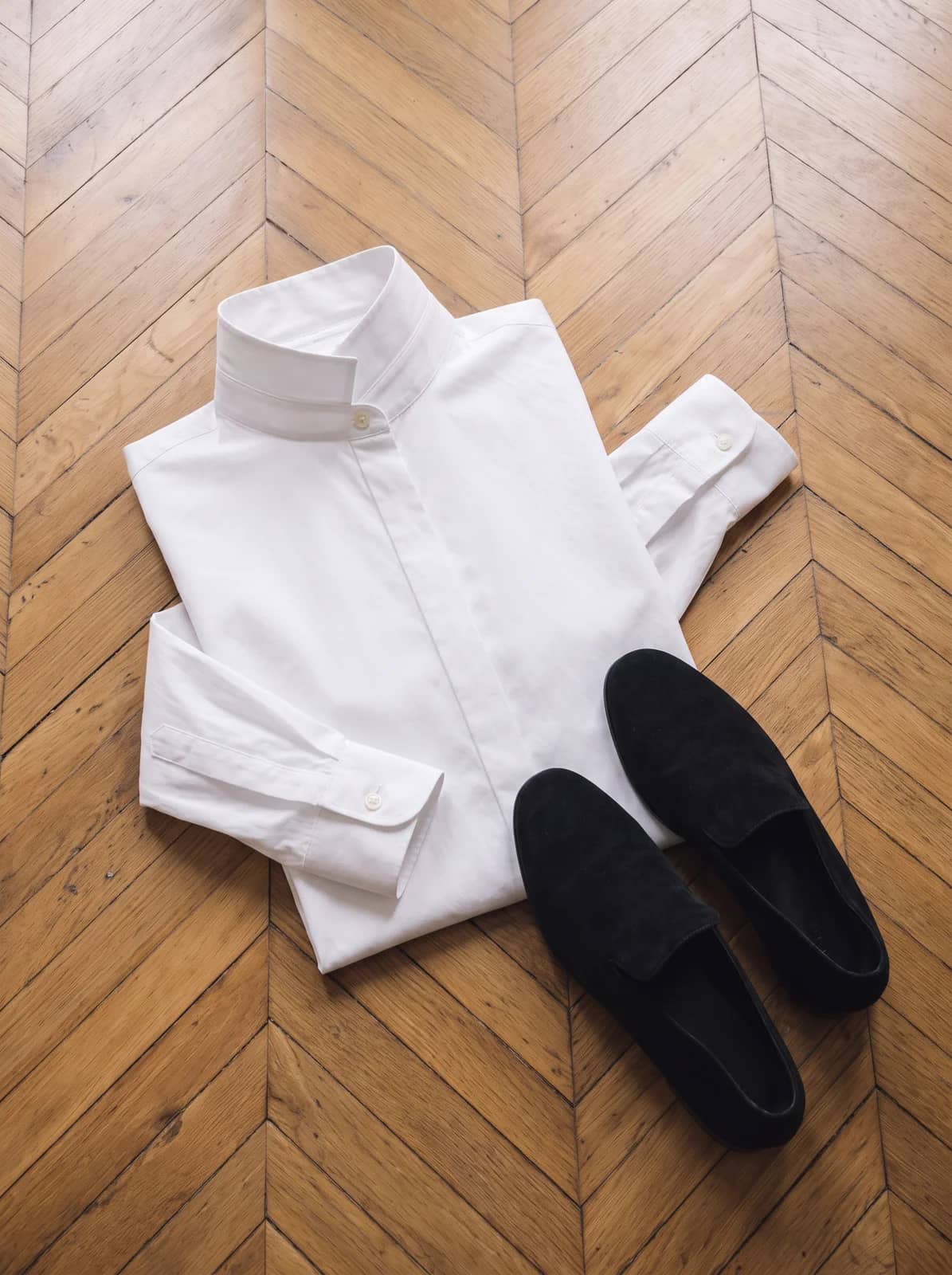
The EnfiladeStill life
07
The checks
Our tools flag; a person checks every frame at full size, never from a thumbnail.
Two layers on every frame. First our tools: a hands-and-feet count, the near-copy test, colour per garment piece against your photo, and any lettering they see.
Then a person at full size, top half and bottom half, never a thumbnail: the face against the model card and its mark, hands and feet, every garment against its own photos, the space, no invented logos, no jewellery we didn't ask for, every label and tag read.
People
The person decides.
Our tools
Our tools flag. Dark fabrics, pattern faults and proportions always go to a person.
The check
If it fails: a retake, a retouch, or a colour fix in finishing.
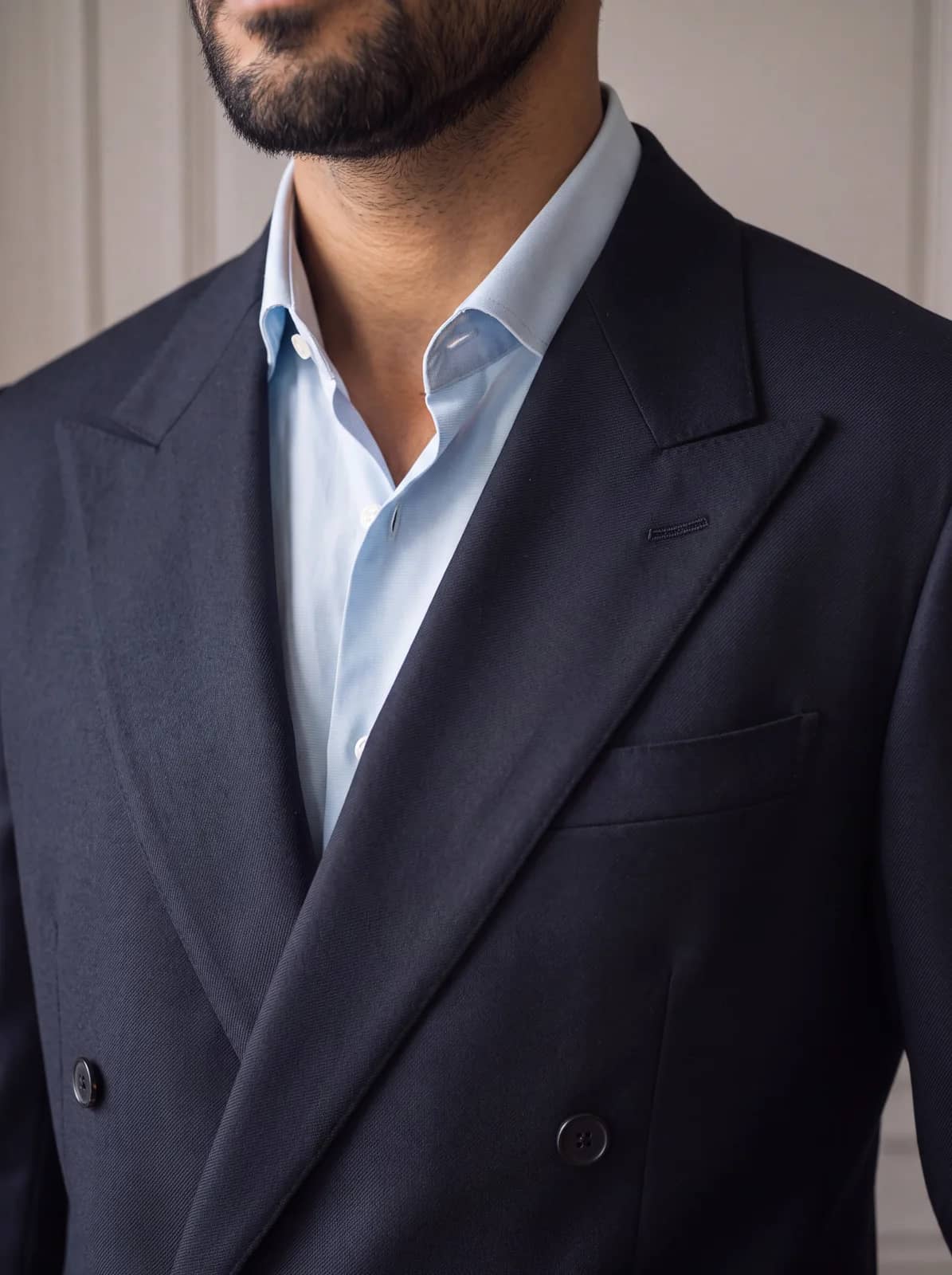
The EnfiladeWaleedDetail
08
Film
Clips start from approved frames, with every face checked frame by frame.
Films start from approved frames. Each clip gets every person's face references and is asked for one continuous shot. Every take is scanned for hidden cuts, the opening trimmed, and the shots cut on motion with one grade, one grain and a music bed.
Fine embroidery is filmed with a moving camera and short cuts, which shows it best in motion.
People
People choose takes, cut, and check frame by frame, the last second especially.
Our tools
Our tools scan for cuts, set each face beside its approved still, and cut the verticals.
The check
Faces at the first, middle and last frame against the still; jewellery per take; the space.
Campaign film
09
Finishing and delivery
Colour corrected against your photo, real logos placed, crops for every format.
Colour is corrected against your photo: hue and saturation move, the frame's light and folds stay. Logos and labels are replaced with your real artwork, set into the frame's perspective and light. Small unwanted marks are retouched with the frame's own grain. Details are cut from the large master, never enlarged.
Then the grade, and crops for the store and every feed. Files are named by campaign and shot and carry copyright and a made-with-AI label in their metadata. Revisions go through the same checks.
People
People decide each fix and re-check it at full size beside the before.
Our tools
Our tools do the colour match, the artwork placement, the retouch, the crops and the export.
The check
Each fix at full size; a review sheet per campaign; nothing is delivered until you approve the set.
9:161:14:5
Why the same is the hard part
Anyone can make one picture. The same, again, is the hard part.
The same face, the same garment, the same space, frame after frame. Here is what drifts when it's done by hand, and what we do about each.
What goes wrongWhat we do
01The face changes from frame to frame.
Our house models are fixed, marks and height included, and every face is checked against the model card.
02The garment redesigns itself between shots.
Every view after the first follows an approved front.
03The colour drifts, and asking again doesn't fix it.
We check it against your photo and correct it in finishing.
04Embroidery wanders, and plain areas get decorated.
We write the garment's structure down once and check every zone against your photos.
05The space changes behind the model.
Our spaces are fixed views; only the model moves.
06The back is invented from the front.
Back views start from your back photo.
07Hands, feet and jewellery go wrong.
Every frame gets a count, then a person at full size.
08Logos and small text come out garbled.
We place your real artwork.
What holds
What holds from your photos, and what we build in with you.
Holds from your photos
Prints, borders, checks, stripes, denim washes, knits and quilting, from phone photos.
Where embroidered zones sit on the piece.
Unstitched fabric made up and worn, once tied to an approved front.
The same face and the same space across a whole range.
Store shots with no model: ghost mannequin, cut-out, flat lay.
Holds with your references
Colour: matched to your photo in finishing.
Backs: from your back photo.
Satin sheen and seated poses: made on our most careful setting.
Signature trims: with the material named.
Agreed with you first
Fine embroidery: pattern-faithful to your piece, the approach agreed before we start.
Small lettering, logos and labels: placed from your real artwork, or kept plain.
Embroidery in motion: a moving camera and short cuts.
Dark fabrics: checked by eye at full size.
Wear: a worn garment comes out looking new.
What to send
Start with what you have. We'll ask for the rest.
Any of these works. Tell us how you sell the piece, and we'll tell you exactly which photos we need.
Flat lay
Laid flat on a plain surface in daylight, front and back, with the whole piece in frame.
Hanger
Against a plain wall, with the whole length in frame and nothing folded over.
Your own photo
A clear photo you already have, on a model or a mannequin, plus a few close-ups.
Unstitched fabric
Every piece of the set laid flat, with the border visible.
Close-ups help most.
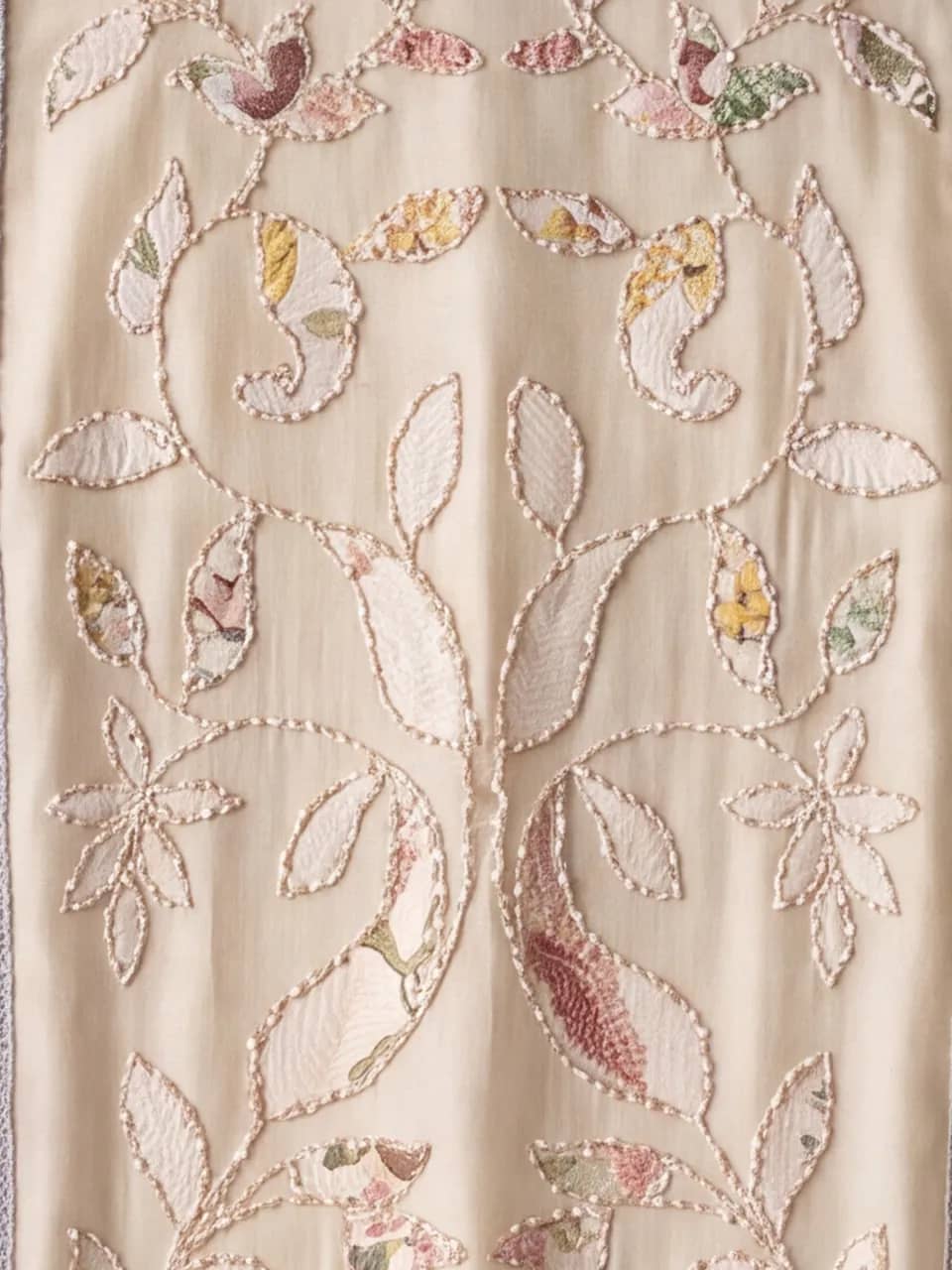
A sharp photo of the print, the embroidery and the border, in daylight, lets us hold every print, border and embroidered zone where it sits on your piece, at the same scale.
EmbroideryStitching
How we check
Nothing leaves the studio until it matches.
We compare every frame with the photos you sent, at full size. How each detail will be handled is agreed with you before we start.
The look, under the loupe
The same lapel, at full size
One garment: the frame, and its lapel cut from the frame, compared at full size.
Every frame, fourteen checks
01Every frame checked at full size
02Print and border where yours sit
03Embroidery zones in place
04Colour checked against your photo
05Fit and length against your photos
06Every view matches the approved front
07Back view from your back photo
08Same face as the model card
09Hands and feet, counted
10No jewellery we didn't ask for
11Logos checked against your artwork
12Every label and tag read
13The same space, every view
14Films checked frame by frame
Revisions are part of the work. The set leaves the studio only when you have approved it.
Questions
Good questions, plain answers.
Anything else, ask us. A message on WhatsApp is the quickest way.
Yes. Our house models, spaces and light are made with AI. People direct every set and check every frame against your garment before it reaches you.
Do I need to send the physical garment?
No. Clear photos are enough for most pieces. We tell you exactly which ones we need, and ask for close-ups where the detail matters.
Can I choose the model and the space?
Yes. Pick from our house models and spaces, or tell us about the drop and we'll suggest what suits the pieces.
Will the print and embroidery match?
That's what we check first: placement, scale and colour, at full size, against your photos. Fine embroidery comes out pattern-faithful to your piece, and we agree the approach with you first.
What if something isn't right?
Tell us and we fix it. Revisions are included, and nothing is delivered until you approve the set.
Can I try it first?
Yes. Send one piece and we make three frames free, before anything is agreed.
A free first look
Send one piece. See it worn.
We make three frames from one of your pieces, free, before anything is agreed: a catalogue front on one of our models, the same piece in one of our spaces, and a close-up checked against your photo. If you like them, we talk about the drop.